


The Master Supervised Machine Learning & GenAI on Anaconda program objective is to enable participants to build supervised machine learning models and Generative AI applications entirely within the Anaconda platform.
Here is the module breakdown based on the program structure:
📅 DAY 1: Supervised Machine Learning with Scikit-Learn

9.00 -9.30am : Module 1- Welcome & Anaconda Environment Setup
- Content: Launching Anaconda Navigator. Creating environments using conda terminal commands. Installing packages. Verifying Python dependencies.
- Code Concepts: conda create -n ml_env python=3.10, conda activate ml_env, conda install scikit-learn pandas.
- Deliverable: A fully verified, isolated local development environment in Jupyter Notebook.
- 📽️ Lecture Notes 📝 Worksheet

09:30 – 11:00 : Module 2- Data Engineering & Exploration with Pandas
- Content: Importing structured datasets. Data cleaning operations. Identifying and treating missing values. Removing outliers. Encoding categorical text data into numbers.
- Code Concepts: pd.read_csv(), df.fillna(), pd.get_dummies(), df.describe().
- Deliverable: A pipeline that converts raw, messy source data into a clean baseline matrix.
- 📽️ Lecture Notes 📝 Worksheet
11.00-11.15am : MORNING COFFEE BREAK
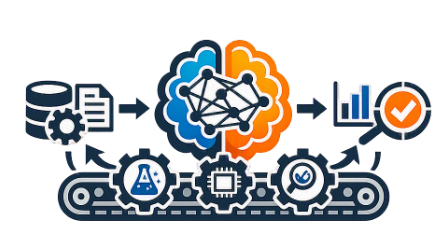
11:15 – 12:30 : Module 3 – The Machine Learning Pipeline Architecture
- Content: Separating targets from prediction features. Preventing data leakage. Splitting data matrices into training subsets and testing subsets. Feature scaling techniques.
- Code Concepts: train_test_split(X, y, test_size=0.2), StandardScaler(), .fit_transform().
- Deliverable: Isolated, scaled training arrays and testing arrays ready for mathematical modeling.
- 📽️ Lecture Notes 📝 Worksheet
12.30-1.30pm : LUNCH BREAK
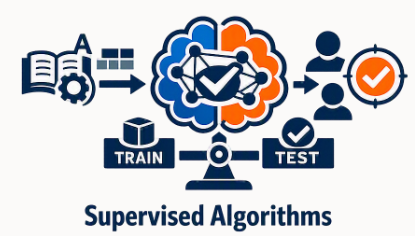
13:30 – 15:00 : Module 4 – Supervised Algorithms in Action
- Content: Mathematical foundations of regression versus classification. Implementing Linear Regression for numerical predictions. Implementing Random Forests for categorical group predictions.
- Code Concepts: LinearRegression(), RandomForestClassifier(n_estimators=100), .fit(X_train, y_train).
- Deliverable: Two distinct, operational supervised learning models trained on custom datasets.
- 📽️ Lecture Notes 📝 Worksheet
15.00- 15.15 pm : AFTERNOON TEA BREAK
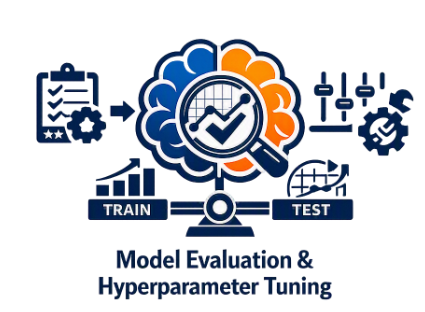
15:15 – 16:30 : Module 5 – Model Evaluation & Hyperparameter Tuning
- Content: Interpreting performance matrices. Decoupling confusion matrices. Tuning model parameters to find the highest accuracy curve using automated grid searches.
- Code Concepts: classification_report(), mean_squared_error(), GridSearchCV().
- Deliverable: An optimized, high-accuracy model backed by verification performance reports.
- 📽️ Lecture Notes 📝 Worksheet
16:30 – 17:00 : Module 6 – Day 1 Debrief & Troubleshooting
- Content: Open floor code debugging. Reviewing model persistence. Saving models to local drives for production deployment.
- Code Concepts: pickle.dump(model, open(‘model.pkl’, ‘wb’)).
- Deliverable: A saved, standalone predictive model artifact ready for production injection.
- 📽️ Lecture Notes 📝 Worksheet
📅 DAY 2: Generative AI & Hybrid Pipelines

09:00 – 09:30 : Module 7 – Day 1 Review & GenAI Package Initialization
- Content: Reviewing supervised machine learning architectures. Updating the Anaconda environment with Generative AI packages. Setting up credential keys.
- Code Concepts: pip install langchain openai transformers, os.environ[“OPENAI_API_KEY”].
- Deliverable: A functional Generative AI engineering environment with external model access.
- 📽️ Lecture Notes 📝 Worksheet

09:30 – 11:00 : Module 8- Prompt Engineering & Large Language Models
- Content: Foundational Large Language Model mechanics. System roles versus user roles. Temperature variables. Structuring prompts to output strict JSON text data.
- Code Concepts: ChatOpenAI(model=”gpt-4o-mini”, temperature=0.2).
- Deliverable: A customized prompt template engine that returns predictable, schema-validated text blocks.
- 📽️ Lecture Notes 📝 Worksheet
11.00-11.15am : MORNING COFFEE BREAK
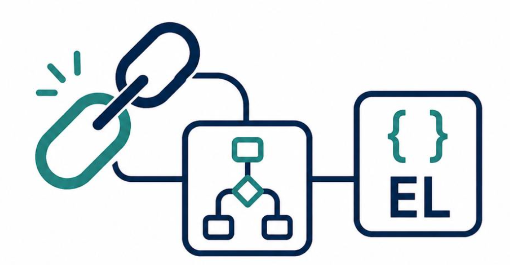
11:15 – 12:30 : Module 9- LangChain Orchestration & Expression Language
- Content: Introduction to LangChain syntax. Creating multi-step operational chains. Feeding runtime variables into prompt schemas. Parsing response messages into Python strings.
- Code Concepts: prompt | llm | StrOutputParser(), chain.invoke({“input”: variable}).
- Deliverable: A pipeline that automates contextual text generation inside a data script.
- 📽️ Lecture Notes 📝 Worksheet
12.30-1.30pm : LUNCH BREAK
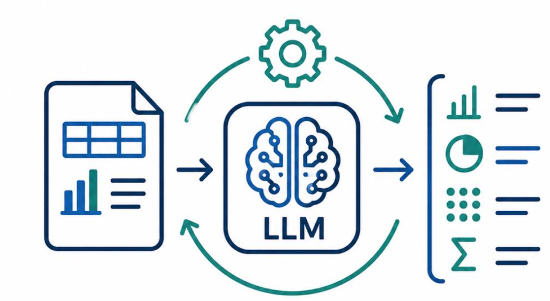
13:30 – 15:00:| Module 10- Automated Feature Extraction via LLMs
- Content: Processing raw, unformatted text columns using LLMs. Extracting hidden features like sentiment metrics or classification tags. Loading outputs into Pandas columns.
- Code Concepts: List comprehensions executing LangChain invokes, df[‘extracted_feature’].
- Deliverable: A Pandas DataFrame enriched with brand new variables calculated by an LLM.
- 📽️ Lecture Notes 📝 Worksheet
15.00- 15.15 pm : AFTERNOON TEA BREAK

15:15 – 16:30 |:Module 11-End-to-End Hybrid Pipeline Integration
- Content: Merging Day 1 and Day 2 architectures. Passing LLM-extracted data features straight into Scikit-Learn supervised algorithms to make final business predictions.
- Code Concepts: RandomForestClassifier.fit(df[[‘extracted_feature’, ‘numerical_feature’]], y).
- Deliverable: A functional hybrid software pipeline that handles both unstructured text and predictive modeling.
- 📽️ Lecture Notes 📝 Worksheet

16:30 – 17:00 : Module 12- Production Best Practices & Wrap-up
- Content: Mitigating token costs. Handling API rate limits. Introduction to local offline models. Distributing completion credentials.
- Deliverable: A finalized personal code repository along with a curated list of study materials.
- 📽️ Lecture Notes 📝 Worksheet